

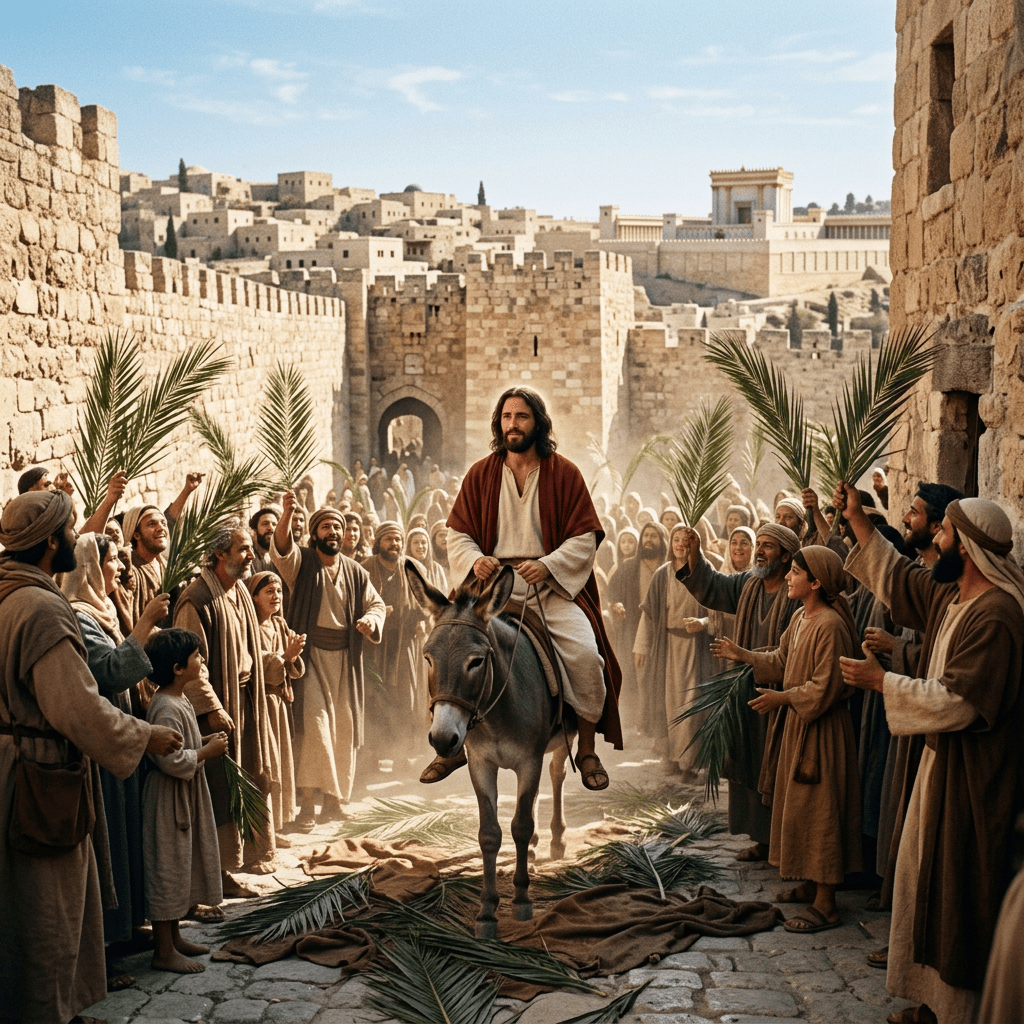
When you think of a king, what comes to mind? Ruthless power? Domination over lesser kingdoms? A man intent on gaining riches? A lawmaker who imposes his will on those too weak to oppose him? A President who makes major decisions without consulting Congress? (The last one is a bit tongue-in-cheek, but it does help make my point.) I cannot think of one king in history, aside from Jesus, who was ever described as meek.
A Western view of meekness leans more toward weakness and passivity. Truthfully, first-century Rome did not think much of meekness, either, though Roman emperors were careful to cultivate a measure of humility in hopes of continuing their rule. Even among God’s people, meekness may have been associated with Moses, but in Jesus’s day, no Jewish leader got to his position because of his meekness. King Herod ruthlessly murdered anyone in his way, and even the High Priest, Caiaphas, got his job by using some shady means.
A Biblical definition of meekness is quite the opposite of human ideas of power. The Topical Lexicon describes meekness as “a heart-attitude of inward gentleness that manifests as humble strength under God’s control. It is not weakness, timidity, or lack of conviction; rather, it is the gracious refusal to advance one’s own cause by force, trusting the Lord to vindicate and exalt in His time.” It is this very description that makes meekness so rare. It must be completely surrendered to God, come what may.
Jesus described Himself as meek in Matthew 11:28-30.
Come unto me, all ye that labour and are heavy laden, and I will give you rest. Take my yoke upon you, and learn of me; for I am meek and lowly in heart: and ye shall find rest unto your souls. For my yoke is easy, and my burden is light.
Can you imagine if Jesus had come the first time as He deserved? As Creator, He had every right to demand obedience. As All-Powerful, He could have annihilated every enemy. As Preeminent, all riches were at His disposal. As the Judge of all Righteousness, He could have rightfully condemned every living being. As all Wise, He could have dethroned every human ruler who would not agree with Him.
One day, the Bible promises that Jesus will rightfully take His place as King of Heaven and Earth. He will reign with perfect power, wisdom, and righteousness. Those who oppose Him will face immediate justice. But those who surrender to His Kingship now will reign with Him then.
Jesus surrendered Himself to the Father’s will at His first coming so that He could invite others into His Kingdom. Matthew 5:5 describes the blessing on those who would join Jesus in His meekness.
Blessed are the meek: for they shall inherit the earth.
Those who continue the descent into Jesus’s Kingdom will display His meekness. Surrendered completely to their King, trusting that every trial is working to make them more like Him, leaving God in the seat of Judgment, following Christ’s example of giving His life away, the meek will receive their reward at long last. Jesus is a far different King than any king this world has ever seen, and His people are meant to be different too.
I hope you are enjoying this study. Below, you will find the study questions for the Third Beatitude and a link to the video with last week’s answers. I’m looking forward to hearing your thoughts and takeaways! As always, I am praying for you. Have a blessed day!
 His Song in the Night